A quick update on recent events. Firstly Curly the one-eyed currawong is still with us, and he seems to be doing quite nicely feeding himself despite his severe handicap. However, i think he is no longer associating with the other currawongs, but has attached hiimself to Vicky Magpie's family. Whether they approve or not I don't know, but he comes and goes when they come and go. He has become a bit more nervous in coming down to get food from us, though. I think his good eye has sunk a little into his head, which might be making it even harder for him to get a good view and feel safe from attack. read more »

Wildlife carers Peter Richards and Gabrielle Friebe from the Long Grass Nature Refuge have rehabilitated cockatoos for over seven years (as well as many other species for 35 years). In the interview below they explain the plight of the pet cockatoo and what one should do to give them a quality of life.
(To receive a free copy of full article you can subscribe to the Wild Bird Talking ezine by entering your details in the box on top of the left hand column.) In this interview you will learn about:
- the physical and emotional problems faced by pet cockatoos in cages
- the needs of pet cockatoos so they can have a more natural life
- essential ways in which to give pet cockatoos a quality of life
- elements of a balanced diet necessary for a healthy bird - keys to eliminate personality problems, have a better relatioship with your companion bird and a good friendship.
You can listen to the audio and view the pictures below. read more »
Looks so like a dragon head - right at our front door....
... check out the slideshow for the full story.
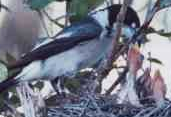
Pied-butcherbirds chicks are usually born in early December. Peter Gregory rescued a pair of chicks and had to work hard to rescue them, but found it was well worth the rewards of his Christmas gift. Here's his story.
Receive a complimentary Australian Wild Birds Calendar for 2010
All subscribers to the free Wild Bird Talking Ezine will receive this free gift for 2010. These are 13 full resolution pictures which you can view on your screen or print as a desktop calendar or wall calendar. Printed on photo paper, it makes a beautiful gift to delight all through the coming year.
Preview
![]() |
Our magpies have been late this year with their babies. We understand why for Vicky's family, because after Maggie's passing it was July before Vicky settled on a new husband, a magpie from a long way away called Bertie. They then took a while to settle in and for Bertie to get to know the local situation. (We know Bertie is not a local magpie because he has a radically different pattern on his back than any birds we have seen, even as far as 120km away in Brisbane.) But our neighbour's magpies Billy and Polly are also late, then finally, ten days ago, a little bub landed in our yard squarking loudly (as all Billy's kids tend to do) demanding his share of the pickings on offer. read more »
Here is Curly, the one-eyed currawong. Curly and the winter currawong mob (maybe a hundred birds) left for greener pastures about four weeks ago, but I've been looking for curly in case he decided to stay for the summer. read more »
Vicky and her new fellow, Bertie, have settled in and Vicky is now tending her nest. We are not sure whether she has hatched eggs, and we haven't been able to bring out our telescope due to the excessive wind and the big dust storms, which have been reported around the world. (We have to put the telescope in our breakfast room with the door wide open.) read more »
Blue-tongue lizards are gentle and friendly creatures. They like firm ground under their feet but will let you pick them up even if they haven't seen humans before. They are nature's helpers in the garden by feeding on snails, crickets, caterpillars and other pests. The birds don't mind them either in striking contrast to their reactions towards goannas and snakes. You will see Frieda magpie happily pottering around this gorgeous creature in the slides below, neither upset by the other's presence. This lizard is the common Eastern vari read more »

Figbirds follow the fruit trail and drop in for a few weeks each year at the start of the mulberry season. Well camouflaged by their plumage these birds are hard to spot as they help themselves to the fresh pickings. read more »